For leaders navigating rapid growth, the pressure to hire is real. But when culture drives talent alignment from day one, you build teams that stay, thrive and deliver results. But you have to hire with purpose.
Rather listen than read? Watch bink CEO, Ann Melinger, and Amanda Pine, SVP, EPM Scientific, discuss hiring with purpose and using culture to create talent alignment that drives revenue.
Why hiring with purpose matters now
People don’t just want a paycheck. Research shows they need three things to feel motivated and engaged at work:
Autonomy over how they do their job
Competence in handling their responsibilities
Real connection with colleagues and the mission
And now, there’s data to back that up on a much bigger scale.
A recent Wall Street Journal analysis of research from the University of Bern found that companies that invest in both compensation and culture outperform everyone else – including the S&P 500.
Those that only focus on pay or only on culture fall short. But the ones that do both? They see powerful results – 19.3% annual returns (2018–2023) compared with 12.1% for the S&P 500.
💡 The takeaway: fair pay gets people in the door, but shared purpose and culture is what makes them stay and perform.
This isn’t a new idea – even Peter Drucker saw it in the 1940s, when he observed that General Motors’ well-paid workers still felt disengaged. Eighty years later, we finally have the ROI to prove his point: money matters, but meaning multiplies it.
When candidates evaluate your company, they’re looking beyond salary and benefits. They’re asking themselves: “Do my values align with this organization? Will I feel like I belong here?”
This is especially true in life sciences. At the core of every breakthrough and life saved, there are employees driven by a shared mission. But when change is constant in this fast-moving, highly regulated industry, complexity can easily cause disconnect and disrupt the culture.
The stakes couldn’t be higher. Without intentional focus on culture, you risk misaligned leadership teams, employee confusion about how their work connects to broader organizational goals and high turnover that undermines innovation and knowledge retention.
So how do you hire with purpose? It starts with three pillars.
Pillar one: Define your purpose through your EVP
Your Employee Value Proposition (EVP) isn’t HR jargon. It’s the clear promise you make to employees about what they’ll experience working at your company.
Think of an EVP as your organization’s DNA. An EVP is the unique combination of your company’s…
Culture
Mission and vision
Values
Career opportunities
Total rewards
Diversity and inclusion
Ways of working
Growth trajectory
Learning opportunities
Here’s what many companies get wrong: they confuse EVP with employer branding. Your employer brand is the wrapper. The external message, the polished career site, the recruiting videos. Your EVP is the substance. What it’s actually like to work there.
A strong EVP is rooted in employee reality, embedded into every stage of the employee lifecycle, told through authentic storytelling and backed up with proof of impact. When candidates see that alignment between what you promise and what employees actually experience, they trust you. And trust is what gets top talent to say yes.
A well-defined EVP solves multiple problems at once. It gives you differentiation in a crowded market. It provides the foundation for all your hiring materials. It helps current employees articulate why they stay. And it becomes your north star for measuring whether you’re delivering on your promises.
Pillar two: Hire for shared purpose through values
Once you’ve defined your EVP, the next step is using your values as a filter for talent.
Think of your hiring process like a funnel. At the top, you’re evaluating skillset. But as candidates move through, you need to assess values alignment, growth potential and communication style. Values sit right in the middle because they’re the connective tissue between technical ability and long-term success.
Here’s the key distinction: you’re looking for “culture add” instead of traditional “culture fit.” Culture fit often becomes code for “someone like us,” which leads to homogenous teams and limits innovation. Culture add means people who align with your core values but bring diverse perspectives, backgrounds and ideas that strengthen the culture.
So how do you actually assess this? Here are some best practices from EPM Scientific:
The presentation exercise
One company asks final-round candidates to prepare a short presentation – not about their work history, but about who they are outside their career. What motivates them? What do they care about? This simple exercise reveals authentic values in a way that traditional interviews miss.
The simple question
Another approach: “What qualities do you like to see in your coworkers?” The answer tells you what the candidate values in a team environment and whether it aligns with how your teams actually operate.
The culture fit interview
Some organizations conduct a panel-style culture interview separate from technical assessments. Representatives from different teams and levels ask behavioral questions tied to company values. This gives candidates multiple perspectives on the culture and helps interviewers spot patterns in how candidates respond to value-based scenarios.
The work sample
One last idea comes from EPM Scientific itself. They create role-play scenarios that give candidates a “day-in-the-life” experience. This tests how people think on their feet, how hey handle challenges and whether they’re coachable. It’s not about getting the right answer. It’s about observing how someone works through problems, which reveals their values in action.
Organizations that screen for values alignment see better retention, faster team integration and stronger performance.
Pillar three: Show purpose in every candidate touchpoint
Here’s where it all comes together.
You can have the best EVP and values in the world, but if candidates don’t experience them throughout the hiring process, they won’t believe you.
Career pages and job posts signal culture
Your careers page should showcase employee quotes and stories that illustrate what it’s actually like to work there, and your values should be front and center (not buried at the bottom of the page). Instead of generic corporate speak, write in a voice that reflects your culture. If collaboration is a core value, explain what that looks like in the role. If innovation matters, describe how people are empowered to bring new ideas forward.
Turn values into behavioral interview questions
Don’t ask candidates, “Are you collaborative?” That’s too easy to fake. Instead, translate your values into behavioral, open-ended questions that reveal how candidates actually live out those values.
For example, if collaboration is a value, ask: “Tell me about a time you built something under pressure with others.” If initiative matters, try: “When was the last time you introduced a new idea or process? What was the outcome?”
These kinds of questions create space for authentic conversation and help you understand not only what candidates have done, but how they think and what they prioritize.
The candidate experience matters
Remember, candidates are evaluating you as much as you’re evaluating them. Rigid scorecards and transactional interviews signal that culture might not actually be a priority. Authentic, flexible conversations where both sides explore alignment create engaged candidates and better hires.
Managers are culture carriers
Your managers are the face of your organization. They set expectations, model culture in action and bridge your EVP to daily behavior. If they’re not trained to recognize and reinforce your values during hiring, you’re leaving culture to chance.
Equip managers with tools: talking points about your values, interview question banks and guidance on what great values alignment looks like. Then reinforce through feedback. When managers see how values-aligned hires perform better and stay longer, they become your strongest advocates for hiring with purpose.
Align candidate promises with employee reality
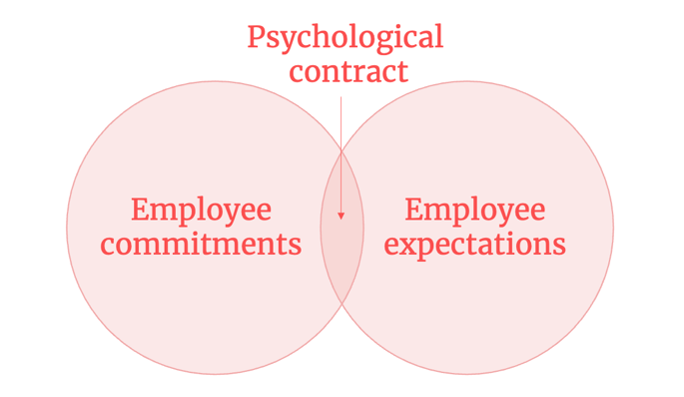
There’s an invisible contract that forms between employer and employee. On one side are employee expectations – what they believe they’ll experience based on what you told them during hiring. On the other side are employee commitments – what they actually experience day-to-day.
When those two circles overlap, you have a strong psychological contract and engaged employees. When there’s a gap, you have turnover. This is why it’s critical that everything you promise candidates during hiring is reflected in the actual employee experience. Your EVP is an accountability framework.
When you align hiring promises with employee reality, you reduce early turnover, improve engagement scores and create a measurable business case for investing in culture.
One action you can take this week
Don’t try to overhaul your entire hiring process overnight. Start small.
Audit one candidate touchpoint for culture alignment. Pick a single place: a job posting, your careers page, an interview question or manager prep materials. Ask yourself: “Does this reflect the culture we want to show?” Then make one small tweak so the candidate experience better matches your EVP and values.
Maybe you rewrite a job description to include an employee quote about what it’s really like to work on that team. Maybe you replace a generic interview question with a behavioral one tied to your values. Maybe you create a one-page guide for managers on how to talk about culture in interviews.
Small changes compound. And when culture drives talent alignment from the very first touchpoint, you hire better and faster.
Hire with purpose
Hiring with purpose isn’t about adding more steps to your process. It’s about being intentional with the steps you already have. When you define your purpose through a strong EVP, hire for shared values and show that purpose in every candidate touchpoint, culture drives talent alignment naturally.
New hires who understand how their work connects to the mission. Teams that stay engaged even during periods of rapid change. Leaders who can point to retention data and say, “This is the ROI of getting culture right.”
Whether you’re managing a hiring ramp-up, rebuilding after leadership changes or trying to reduce turnover in critical roles, hiring with purpose gives you a framework that works. Because at the end of the day, the best cultures aren’t built by accident. They’re built one intentional hire at a time.
Let’s make your company culture a competitive advantage.